


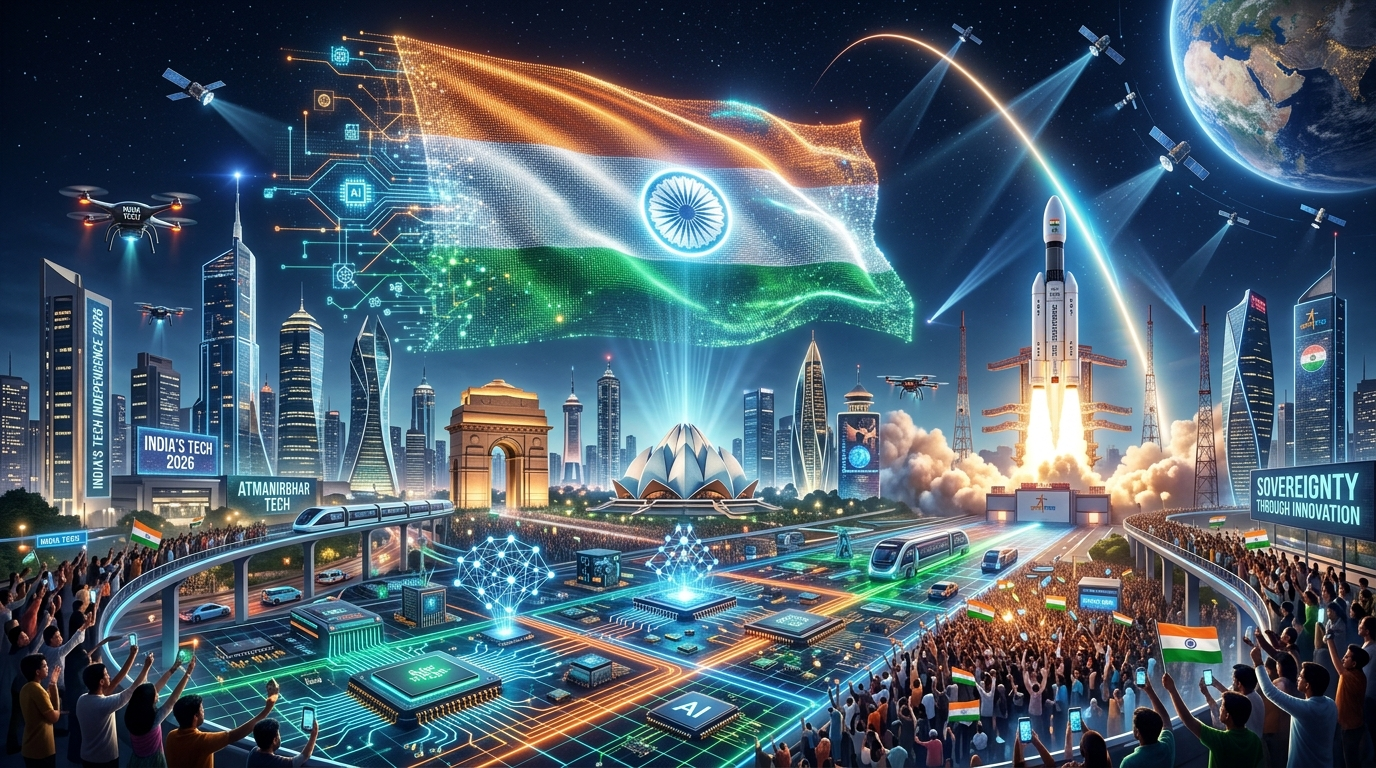
Every year on August 15th, India celebrates the spirit of freedom, resilience, and boundless potential. In 2026, as the tricolor waves proud across 1.4 billion citizens and millions worldwide, the definition of independence has expanded into a critical new dimension: Technological Sovereignty. The journey that began with software services and business process outsourcing decades ago has transformed into an era of deep-tech creation, indigenous silicon fabrication, sovereign artificial intelligence, and interstellar exploration.
Today, India is no longer merely the "back-office of the world." It has cemented its position as a global deep-tech architect—building open digital public infrastructure, pioneering multilingual AI, manufacturing cutting-edge microchips, and leading humanity’s commercial space frontier. Here is how India achieved this monumental transformation and what it means for the global technology ecosystem.
1. The Paradigm Shift: From Software Services to Deep-Tech Innovator
For over three decades, India's IT sector was renowned for enterprise software engineering, IT consulting, and IT outsourcing. While this laid an extraordinary foundation of digital talent and engineering discipline, 2026 marks a decisive shift towards intellectual property creation and deep-tech innovation.
Indian startups and engineering hubs are now pioneering proprietary foundational models, quantum cryptography algorithms, autonomous robotics, and edge computing frameworks. Backed by strategic private capital and forward-thinking national initiatives, Indian enterprises are transitioning from executing technical roadmaps to authoring the fundamental standards of tomorrow's digital economy.
2. Sovereign AI: Democratizing Intelligence for 1.4 Billion People
In an era where artificial intelligence defines economic power, data sovereignty has become as essential as territorial integrity. Through the landmark IndiaAI Mission, India has successfully built and deployed sovereign compute clusters, empowering domestic researchers and enterprises with accessible high-performance GPUs.
Crucially, India's AI revolution is uniquely focused on inclusive, multilingual foundation models. Projects powered by the Bhashini ecosystem and domestic frontier labs now understand, translate, and generate voice and text across 22 official languages and hundreds of regional dialects. From empowering rural farmers with real-time agronomy AI to enabling automated vernacular governance, India has proven that AI sovereignty is the bedrock of democratic digital empowerment.
3. The Silicon Renaissance: Homegrown Semiconductor Ecosystem
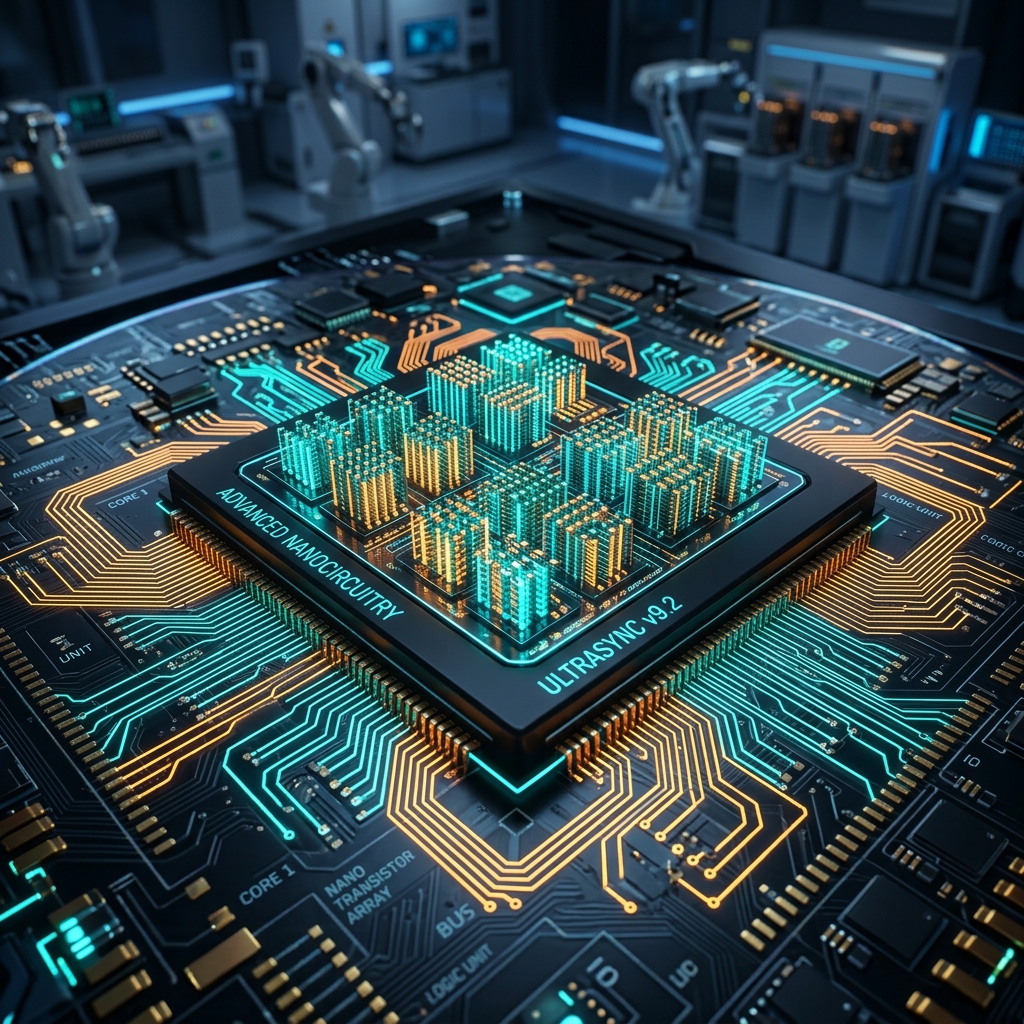
Global supply chain disruptions demonstrated that true technological independence is impossible without microchip fabrication capabilities. India's multi-billion dollar Semiconductor Mission has borne historic fruit in 2026, with world-class commercial fabs and advanced packaging facilities operating at full capacity in Dholera, Sanand, and beyond.
By coupling silicon fabrication with India's world-leading chip design talent—responsible for designing over 20% of the world's VLSI circuits—India is now producing indigenous microcontrollers, automotive silicon, power semiconductors, and IoT chips that power global automotive, aerospace, and consumer electronics industries.
4. Space Tech & Interstellar Ambitions: ISRO and the Private Space Economy
From the historic achievements of the Chandrayaan and Aditya-L1 missions to the crewed Gaganyaan orbital milestones, India's space program is a source of immense national pride and technological excellence. In 2026, India's space ecosystem has evolved into a vibrant public-private partnership.
Private aerospace innovators across Bengaluru, Hyderabad, and Chennai are launching commercial satellite constellations, developing reusable rocket propulsion systems, and providing low-latency Earth observation analytics to governments and global enterprises. India is proving that high-reliability, capital-efficient space engineering can open the final frontier for all of humanity.
5. India Stack 3.0: The Global Blueprint for Digital Public Infrastructure
Perhaps India's greatest gift to modern digital democracy is its Digital Public Infrastructure (DPI). Built on open APIs, interoperability, and user consent, the India Stack has revolutionized financial inclusion, digital identity, and commerce:
- Unified Payments Interface (UPI): Processing over 15 billion instant transactions monthly, UPI is now interconnected with payment networks across Europe, Southeast Asia, the GCC, and the Americas.
- ONDC (Open Network for Digital Commerce): Unbundling e-commerce to allow local mom-and-pop retailers to compete on equal footing with global tech giants.
- Digital Health & Consent Data: Providing secure, patient-controlled health records and verifiable digital credentials for education, employment, and business registration.
Global institutions and over 30 countries have actively adopted or studied India's DPI blueprint as the gold standard for transparent, low-cost, and equitable public tech architecture.
6. Global Capability Centres (GCCs): The High-Value Nerve Centers
India's Global Capability Centres (GCCs) have transformed into strategic nerve centers for Fortune 500 enterprises. No longer cost-arbitrage units, modern GCCs in Delhi-NCR, Bengaluru, Pune, Hyderabad, and Tier-2 emerging hubs are leading global AI research, cybersecurity defense, cloud platform engineering, and sustainability analytics.
Top multinational executives increasingly manage global business divisions directly from Indian tech capitals, demonstrating the unparalleled depth of managerial and engineering leadership in the country.
7. The Road to a $1 Trillion Digital Economy
As India marches toward its centenary milestone, the target of a $1 Trillion digital economy is well within reach. The synergy of young demographic talent, robust digital public rails, world-class software engineering, and progressive policy frameworks makes India the definitive engine of 21st-century technological growth.
Conclusion: Celebrating True Technological Freedom
Independence in the 21st century is not merely political; it is economic, technological, and intellectual. On this Independence Day 2026, India stands tall as a beacon of open innovation, sovereign engineering, and ethical technology for the global good. At Decent Global Outsourcing (DGO), we celebrate the ingenuity of our engineers, innovators, and partners who continue to push the boundaries of software, cloud, and digital transformation every single day. Happy Independence Day!