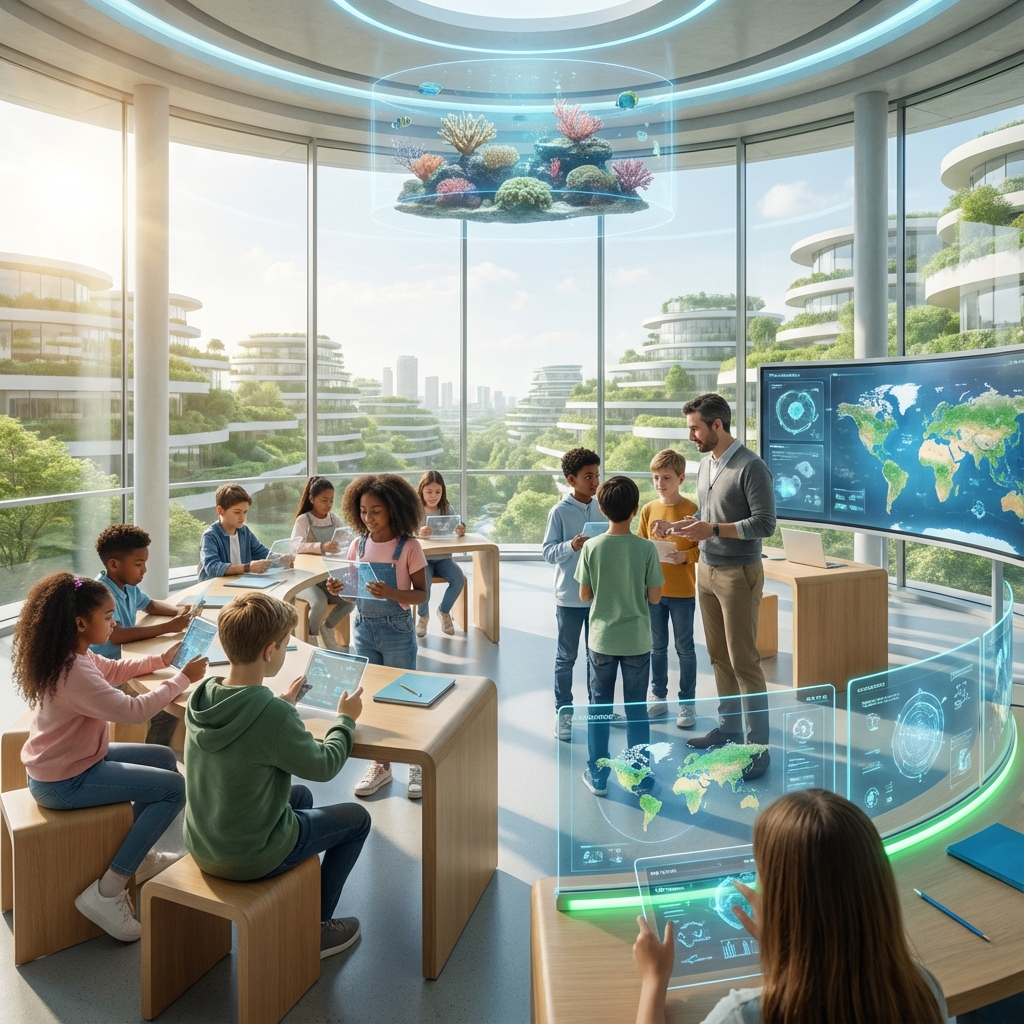
The definition of "literacy" has expanded. In 2025, being literate means being fluent in the language of technology. While touch typing remains a foundational skill for interface interaction, the curriculum for the next generation must pivot to address the realities of an AI-saturated world. We are raising the first generation of "AI Natives," and their success depends on mastering Digital Fluency.
This comprehensive guide covers the essential pillars of modern digital education: Coding as Literacy, Critical Thinking in the Age of AI, and Digital Citizenship.
1. Coding is the New Cursive
There is a debate: "Why learn to code if AI can write software?" The answer lies in Computational Thinking. Learning to code isn't just about syntax; it's about learning how to think. It teaches children how to break complex problems into small, manageable steps (decomposition) and how to recognize patterns.
Tools for 2025: Educational platforms has evolved. Roblox Studio and Fortnite Creative have turned game design into a gateway for Lua and Verse programming.
The Skill: Understanding the logic behind the screen empowers kids to be creators, not just consumers.
2. Navigation & Information Literacy (Media Literacy)
The internet of 2025 is a firehose of information, much of it AI-generated. The most critical survival skill for a child today is the ability to distinguish truth from fabrication.
The Challenge: Deepfakes and hallucinations make reliable sourcing difficult.
The Solution: Schools are implementing "Skepticism First" curricula. Students are taught to triangulate information sources and identify "persuasive intent" in media. It's about asking: Who made this? Why did they make it? Is it real?
3. AI Literacy: Understanding the Machine
Children need to understand that AI is not magic; it is math. Demystifying algorithms is crucial to preventing over-reliance.
Key Concept: "Algorithmic Bias." Kids should learn that AI models are trained on human data, which can contain mistakes and prejudices. Understanding this helps them view AI outputs critically rather than as absolute truth.
4. Balancing Screen Time: The Green vs. Screen Debate
A purely digital childhood is not a healthy one. In 2025, the conversation has shifted from "limiting hours" to "optimizing quality." Not all screen time is equal. Creative Screen Time (coding, designing, writing) is distinct from Passive Consumption (scrolling videos).
Guideline: Experts recommend the "20/20/20 Rule" to protect vision (every 20 minutes, look at something 20 feet away for 20 seconds) and emphasize outdoor play to develop spatial awareness that 2D screens cannot provide.
5. The Continued Relevance of Touch Typing
Even with voice-to-text, the keyboard is the primary interface for deep, non-linear work. Coding, editing, and essay writing require the precision of typing. Gamified typing lessons ensure that children can translate their thoughts to screen as fast as they can think, removing friction from the creative process.
6. Digital Citizenship & Cyber Safety
The playground is digital, and the rules of engagement matter. Digital Citizenship covers privacy (protecting personal data), etiquette (anti-cyberbullying), and footprint management.
Privacy First: With biometric data becoming common, teaching kids the value of their own digital identity is paramount.
Conclusion
Empowering children with these skills isn't just about future careers; it's about giving them the agency to navigate and shape their world confidently. In 2025, the most successful students will be those who can command the AI options available to them, rather than being commanded by them.