We've moved past the novelty phase of consumer AI. We are no longer amazed that a speaker can tell us the weather. In 2025, the technology has faded into the background, becoming the invisible fabric of a convenient, efficient, and healthy life. This is the era of Ambient Computing.
This article explores how AI acts as an invisible assistant in our Smart Homes, our Health, and our daily logistics.
1. The Proactive Smart Home (Ambient Intelligence)
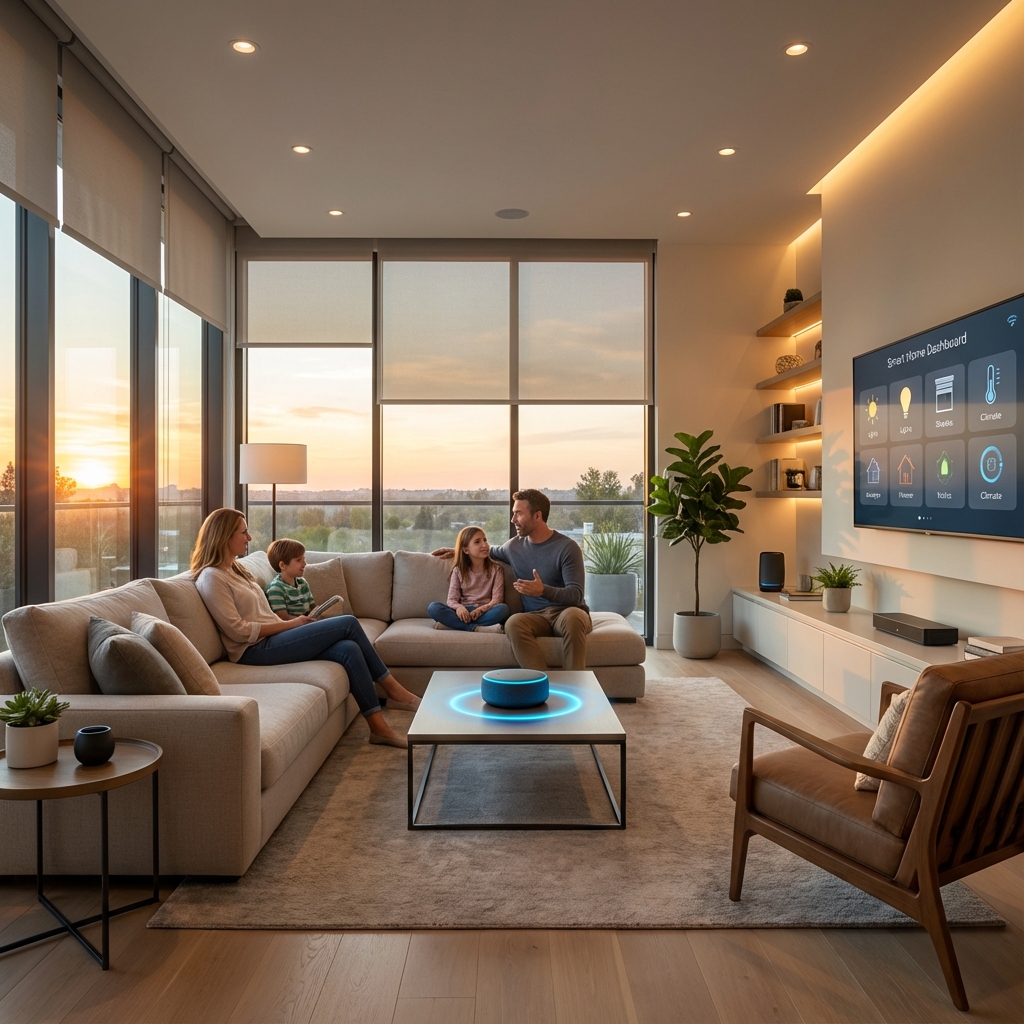
The Smart Home of 2020 was reactive: "Turn on the lights." The Smart Home of 2025 is proactive: It knows you're awake because your wearable signaled a shift in sleep phase. It slowly brightens the lights to mimic a sunrise. It warms the floor in the bathroom. It brews the coffee.
Context Awareness: Sensors don't just detect motion; they detect presence and intent. The house optimizes itself for your comfort without you issuing a single command.
2. Energy & Sustainability: The AI Grid
With energy costs rising, AI has become the home's CFO. Smart Energy Management Systems (SEMS) talk to the grid in real-time.
The Scenario: Your EV charger waits until 2 AM when rates are lowest. Your solar battery sells power back to the grid during peak pricing. The HVAC system pre-cools the house before the afternoon heat spike. All of this happens automatically, shrinking your carbon footprint and your bill.
3. Preventive Health Care: The Doctor on Your Wrist
Wearables have graduated from step counters to medical devices. In 2025, your smartwatch constantly monitors biometrics: Heart Rate Variability (HRV), blood oxygen, glucose trends, and stress markers.
Predictive Health: The AI analyzes this continuous stream. "Your HRV is unusually low, and your temperature is rising slightly. You may be fighting a virus. We recommend staying hydrated and skipping the gym today."
Telehealth 2.0: This data integrates (with permission) directly with your doctor, allowing for long-term trend analysis rather than a 15-minute snapshot during a visit.
4. The Integration Challenge: Standards Matter
A smart home isn't smart if the fridge can't talk to the oven. In 2025, the universal standard Batter (an evolution of Matter) finally unites the ecosystem. Whether you use Apple Home, Google Home, or Amazon Alexa, devices work together seamlessly.
Advice: When buying new tech, look for the "Universal Connect" certification to ensure future-proofing.
5. Privacy: The Shift to Edge AI
With cameras and microphones everywhere, privacy is the top concern. The solution is Edge AI. This implies that the processing occurs on the device itself, not on a server farm.
Benefit: Your security camera recognizes a face, but the video feed never leaves your local network. Privacy is baked into the hardware.
6. The End of Chores? (Robotics)
Consumer robotics has finally caught up to the AI. Robotic vacuums now identify and avoid obstacles (like cords or pet messes) with near-perfect accuracy. AI 'Butlers' can manage grocery inventory, auto-ordering essentials before you run out.
Future Outlook
The goal of AI in 2025 isn't to create a sci-fi world of robots; it's to give us back our most precious resource: time. By offloading the cognitive load of running a life, we are free to actually live it.