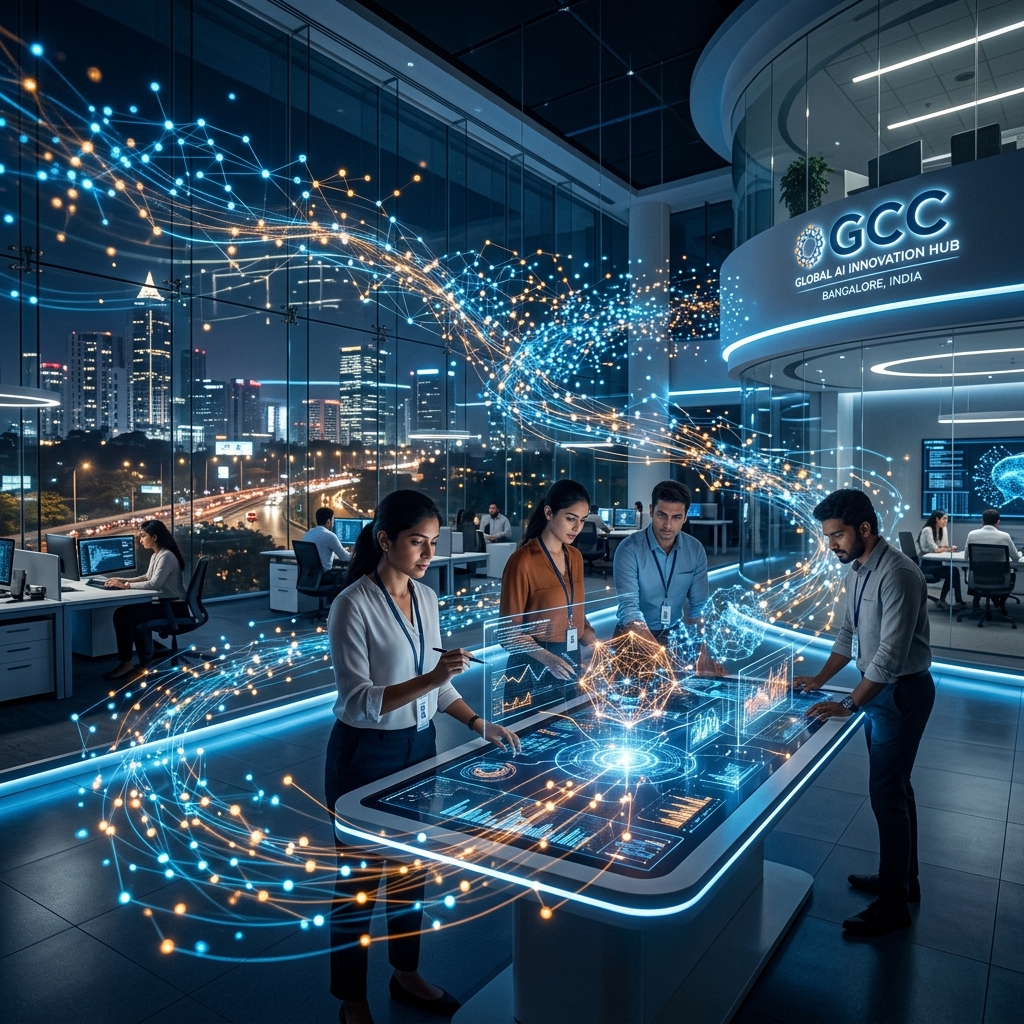
For years, Artificial Intelligence was confined to flat screens, processing text, pixels, and voice inputs. In 2026, the boundaries between the digital and physical worlds are dissolving. The hottest frontier in deep tech is Physical AI (also known as Embodied AI)—the integration of advanced cognitive models directly into mechanical systems that can touch, move, and manipulate the real world.
This article explores how the convergence of Large Physical Models (LPMs), high-performance edge compute, and advanced robotics is transforming industries globally and inside India's expanding industrial hubs.
1. The Screen Escape: What is Physical AI?
Traditional AI excels at cognitive labor—writing emails, analyzing spreadsheets, or generating artwork. However, it is blind and numb to the physical realities of gravity, friction, and dynamic space. Physical AI bridges this gap.
By pairing neural networks with multi-modal sensory inputs (depth cameras, tactile sensors, and LiDAR) and actuator outputs, AI gains a physical presence. The robot no longer needs to be explicitly programmed to move a box; it understands what a box is, feels its weight, and adjusts its grip autonomously in real time.
2. Large Physical Models (LPMs): The Cognitive Engine
Just as LLMs are trained on the internet's text, Large Physical Models (LPMs) are trained on physical simulations and real-world interactions. These models learn the laws of physics, spatial relationships, and material behavior.
Simulation-to-Real (Sim2Real): In 2026, developers train robots in hyper-realistic physics simulators for millions of hours in a matter of days. The learned policies are then transferred to physical robots. This has reduced the time it takes to train a robot to perform a complex task from months to a few hours.
3. The Industrial Renaissance: Logistics and Manufacturing
The immediate impact of Embodied AI is being felt on the factory floor and in fulfillment warehouses.
Dynamic Warehousing: Instead of simple automated guided vehicles (AGVs) following magnetic strips on the floor, 2026 warehouses employ autonomous mobile manipulators. These robots navigate dynamic pathways, pick complex objects from mixed bins, and pack them safely, working alongside humans seamlessly.
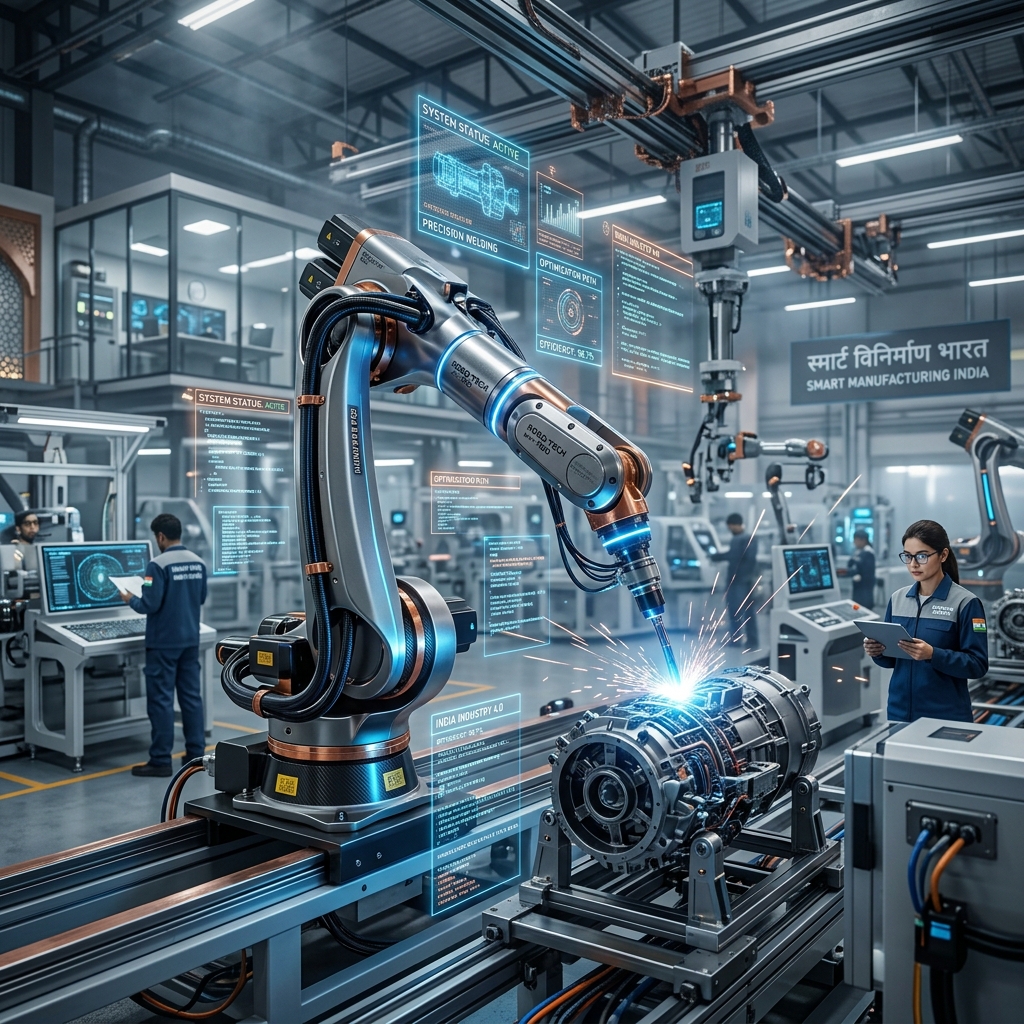
Precision Manufacturing: In India's new electronics and automotive assembly plants, robotic arms powered by Physical AI handle delicate wiring and microscopic screw installations, self-correcting when parts are misaligned.
4. Agriculture and Smart Farming in India
India's agricultural sector is undergoing a quiet revolution fueled by localized Physical AI.
Precision Harvesting: Autonomous picking arms are being deployed to harvest delicate crops like fruits and tea leaves. Using multispectral vision, the AI assesses ripeness and disease, picking only the perfect specimens without damaging the plant or surrounding crop.
5. Healthcare: Surgical and Assistive Robotics
In medicine, precision and adaptability are matters of life and death. Physical AI is elevating surgical procedures and patient care.
Co-operative Surgery: AI-powered surgical assistants stabilize human hands, filter out tremors, and dynamically suggest optimal incision angles based on real-time tissue mapping.
Empathetic Rehabilitation: Exoskeletons and robotic nursing assistants learn the specific gait and strength profiles of patients, providing tailored assistance for mobility and recovery, making elder care more dignified and accessible.
6. Technical Challenges: Edge Compute and Latency
Bringing AI into the physical world introduces severe technical bottlenecks that do not exist in cloud-based software.
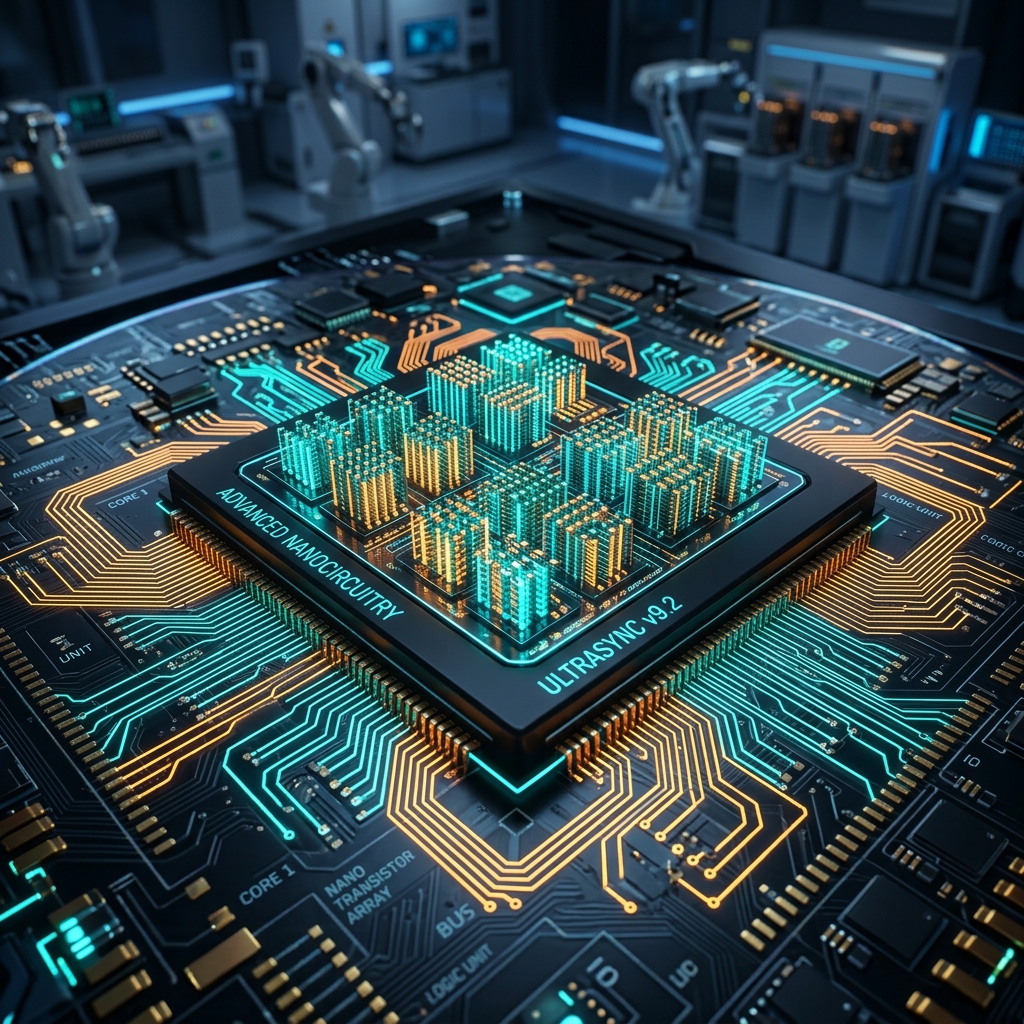
The Need for Edge AI: A robot cannot wait for a cloud server to process a depth camera feed when it is about to drop a fragile component. It needs ultra-low-latency processing on-device. This requires power-efficient, high-performance edge processors and 6G integrations.
7. Preparing Your Business for the Embodied Era
Embodied AI is not a distant science fiction; it is scaling today. Businesses must plan their transition now.
- Audit physical workflows: Identify high-variance, labor-intensive tasks that traditional automation struggles to handle.
- Standardize data collection: Build datasets of your physical operations—CAD models, spatial layouts, and workflow logs.
- Invest in hybrid environments: Design spaces where humans and intelligent machines can safely co-exist and collaborate.
Conclusion
Physical AI is the ultimate realization of the AI revolution. By escaping screens and entering the physical world, intelligent machines are poised to solve some of our most critical challenges in labor, manufacturing, agriculture, and healthcare. As India scales its hardware manufacturing and semiconductor base in 2026, the convergence of software intelligence and physical action will define the next decade of industrial leadership.