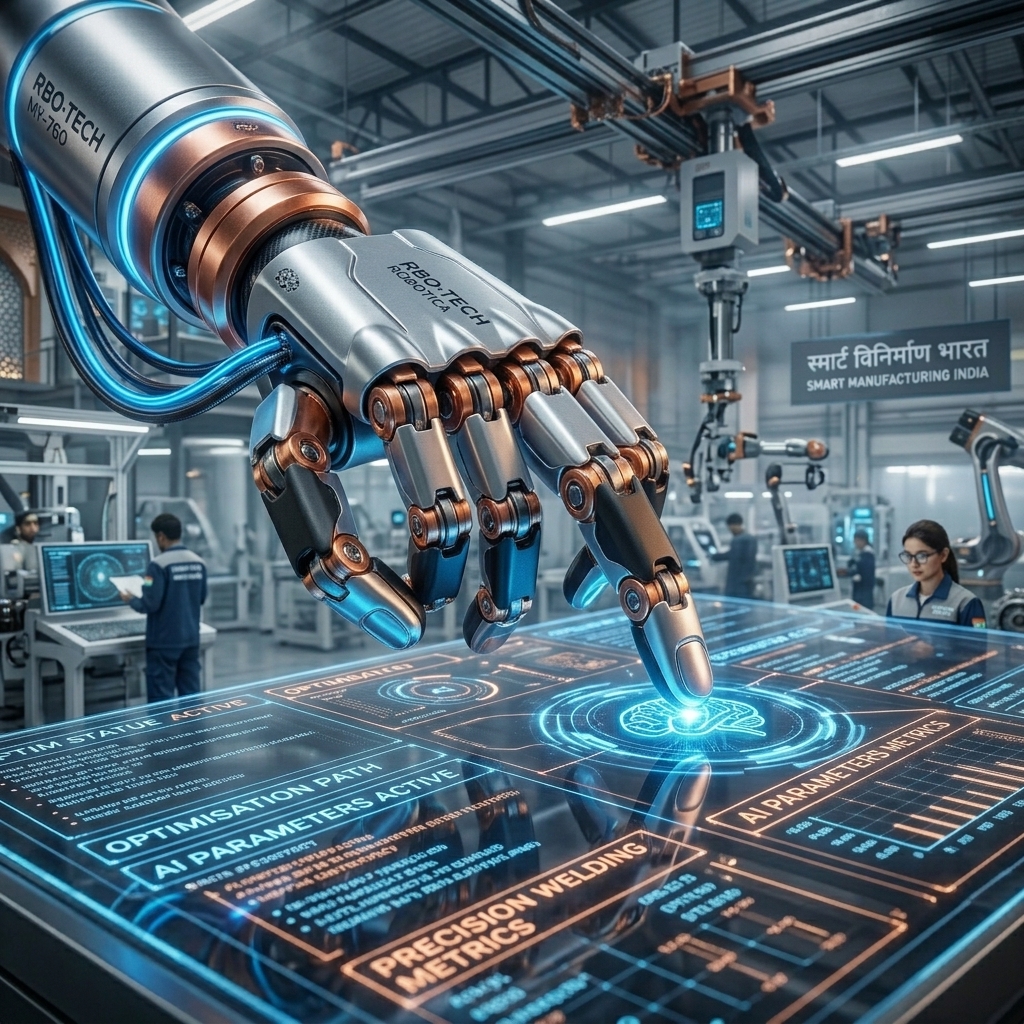

For the past few years, the world marvelled at chatbots that could write poetry or explain quantum physics. But talking is no longer enough. In 2026, the artificial intelligence landscape has definitively shifted from conversation to action. Welcome to the era of Autonomous Agentic AI, where software doesn't just answer your questions—it does your work.
This article explores the rise of the digital worker, how autonomous agents function, and why "Agentic Workflows" are the new competitive advantage for businesses worldwide.
1. The Evolution: From Chatbots to Agents
The first generation of generative AI was a sophisticated search engine and text predictor. You gave it a prompt; it gave you an answer. But what if the answer requires thirty complicated steps across five different software applications?
The Agentic Shift: Agentic AI represents the move from assistance to agency. An AI agent is given a high-level goal, such as "research our top three competitors, create a presentation on their weaknesses, and email the draft to the marketing team." The agent breaks this goal into a plan, executes the plan, self-corrects if it encounters a hurdle, and delivers the final result.
2. Anatomy of a Digital Worker
What makes an AI "agentic"? It requires a specialized architecture that goes beyond a large language model (LLM).
- Memory: Agents maintain long-term contextual memory, remembering past interactions, company guidelines, and previous project outcomes to inform new tasks.
- Tool Use: Agents have "hands"; they are integrated with external tools like web browsers, code interpreters, SQL databases, and enterprise APIs (Salesforce, Jira, Slack).
- Reasoning & Planning: Before acting, agents use iterative reasoning frameworks (like Chain-of-Thought or Tree-of-Thoughts) to simulate potential solutions and choose the best path forward.
3. The Rise of Multi-Agent Systems
As impressive as a single agent is, 2026 is defined by Multi-Agent Orchestration. Complex problems are solved by deploying a team of specialized digital workers.
The Virtual Company: Imagine a software development team containing a "Manager Agent," a "Coder Agent," a "QA Agent," and a "Documentation Agent." The Manager takes the user's requirements and delegates tasks. The Coder writes the code and passes it to QA. If QA finds a bug, it sends it back to the Coder. This autonomous feedback loop produces high-quality outputs with minimal human intervention.
4. Transforming the IT Landscape
IT departments are no longer just managing software; they are managing digital workforces. The skills required by IT professionals are evolving rapidly.
Agent Ops: A new discipline has emerged. "Agent Ops" involves deploying, monitoring, and securing autonomous agents. IT personnel must ensure that agents operate within defined guardrails, don't hallucinate destructive commands, and consume computing resources efficiently.
5. The Economics of Agency
For businesses, the ROI of Agentic AI is staggering. Tasks that previously took weeks are completed in hours. Startups are scaling to massive valuations with surprisingly small human headcounts, relying on "Agentic Leverage."
The term "10x Engineer" is being replaced by the "100x Manager"—a human capable of directing a large fleet of AI agents to execute complex, multi-disciplinary projects.
6. The Human-in-the-Loop Imperative
With great autonomy comes great risk. An agent with uncontrolled access to a company's cloud infrastructure could accidentally delete vital data or leak sensitive information.
Bounded Autonomy: The gold standard in 2026 is bounded autonomy. For high-stakes decisions—like making a financial transaction or pushing code to production—the agent pauses execution and requests explicit human approval. Humans act as editors and directors, rather than creators.
Conclusion
Agentic AI is the bridge between digital intelligence and physical-world impact. We are moving from software that we use, to software that works for us. As we integrate these digital workers into our daily lives, the limit of what a small, focused team can accomplish is expanding exponentially.