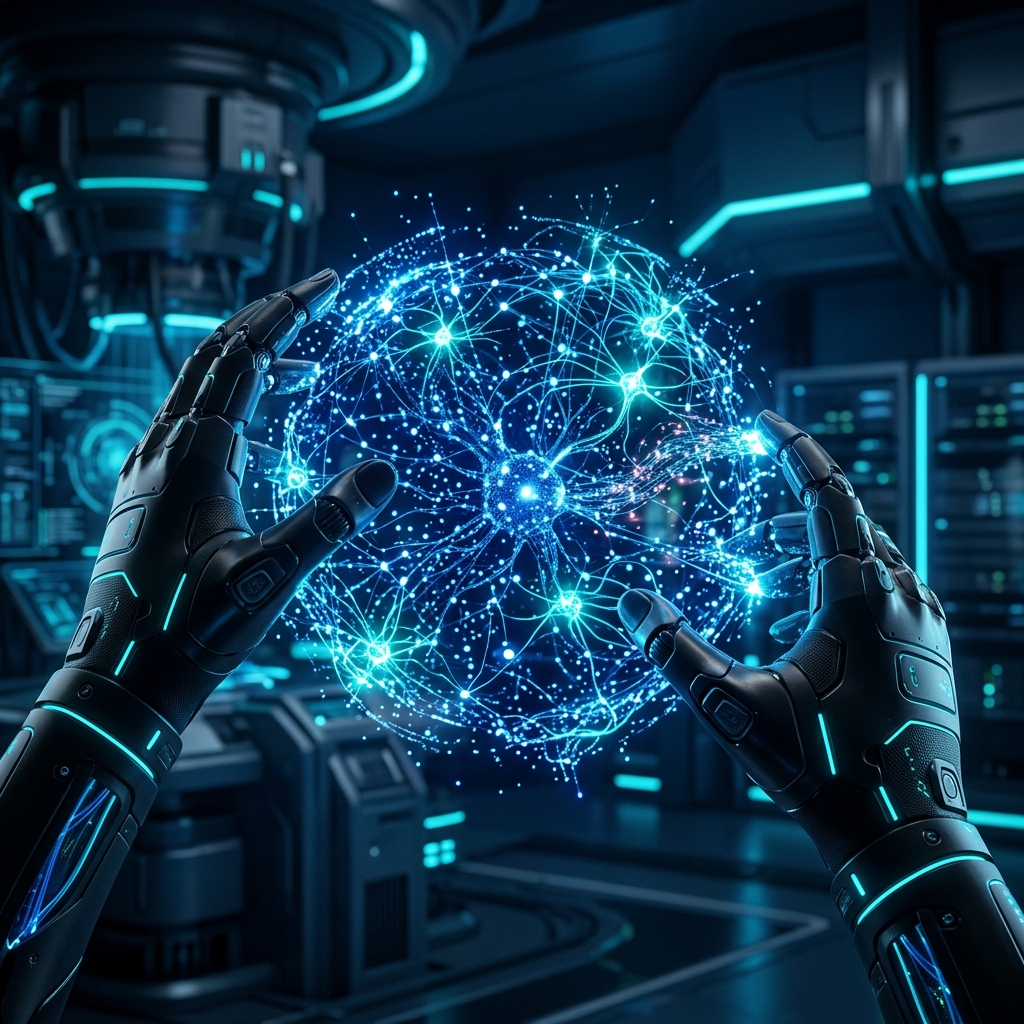
For sixty years, Moore's Law has ruled the world. We shrank transistors until they were the size of atoms. But now, we are hitting a physical wall. The future of high-performance computing might not be a smaller chip—it might be a living one. Welcome to the era of Bio-Computing.
This article explores Organoid Intelligence (OI), the incredible efficiency of the human brain compared to AI, and the ethical frontiers of Wetware.
1. The Energy Crisis of AI
Training GPT-4 required enough electricity to power a small town. The human brain, which is infinitely more adaptable, runs on about 20 watts—roughly the power of a dim lightbulb. Silicon is fast, but it is dumb and hot. Biology is slow, but it is incredibly efficient and smart.
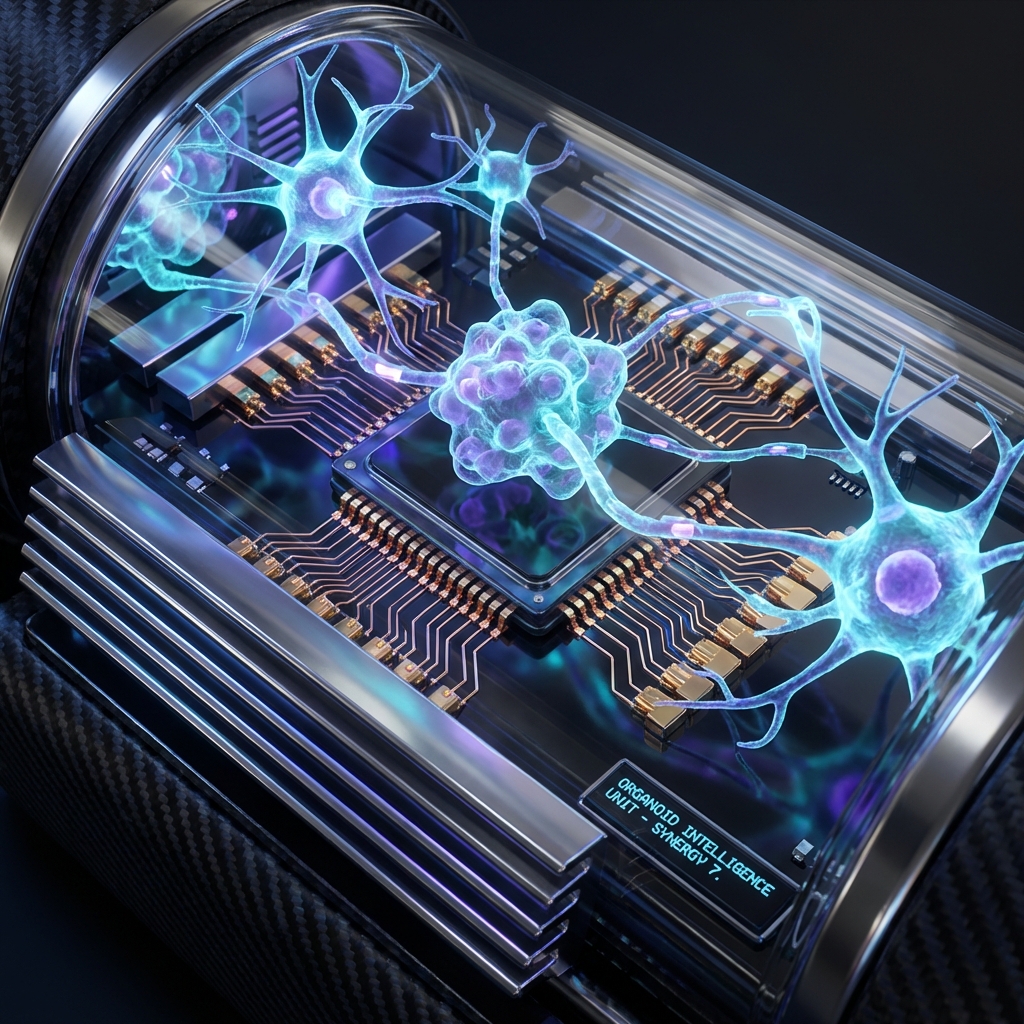
The shift: Researchers are now building "biocomputers" that interface silicon circuits with lab-grown clusters of brain cells called organoids.
2. Organoid Intelligence (OI): The New AI
Unlike traditional AI which simulates neural networks, OI uses actual neural networks. In 2026, labs have successfully trained organoids to play Pong and operate basic flight simulators faster than reinforcement learning algorithms.
Why it matters: Biological neurons learn with "one-shot learning." They don't need billions of examples; they can learn from a handful.
3. DNA Storage: The Ultimate Hard Drive
We are running out of data centers. But nature solved storage billions of years ago. DNA Data Storage can store the entire world's internet in a shoebox. It is dense, stable for thousands of years, and consumes zero energy once written.
4. Medical Revolution: Personalized Medicine
The first "killer app" for bio-computing isn't a laptop; it's medicine. By building a "brain-on-a-chip" using a patient's own stem cells, doctors can test Alzheimer's drugs on actual human neural tissue without risking the patient.
5. The Ethics of "Thinking" Machines
If a computer is made of brain cells, can it feel pain? Does it have rights? In 2026, the field of Bioethics is exploding. "Consent" and "Sentinel Rights" are now serious legal debates.
Consensus: Current organoids are too primitive for consciousness, but strict regulations are being drawn up now to prevent crossing that line.
Final Thoughts
We are witnessing the merger of biology and technology. The computer of 2035 won't just be built; it will be grown. And it will be the most sustainable, powerful mind we have ever created.