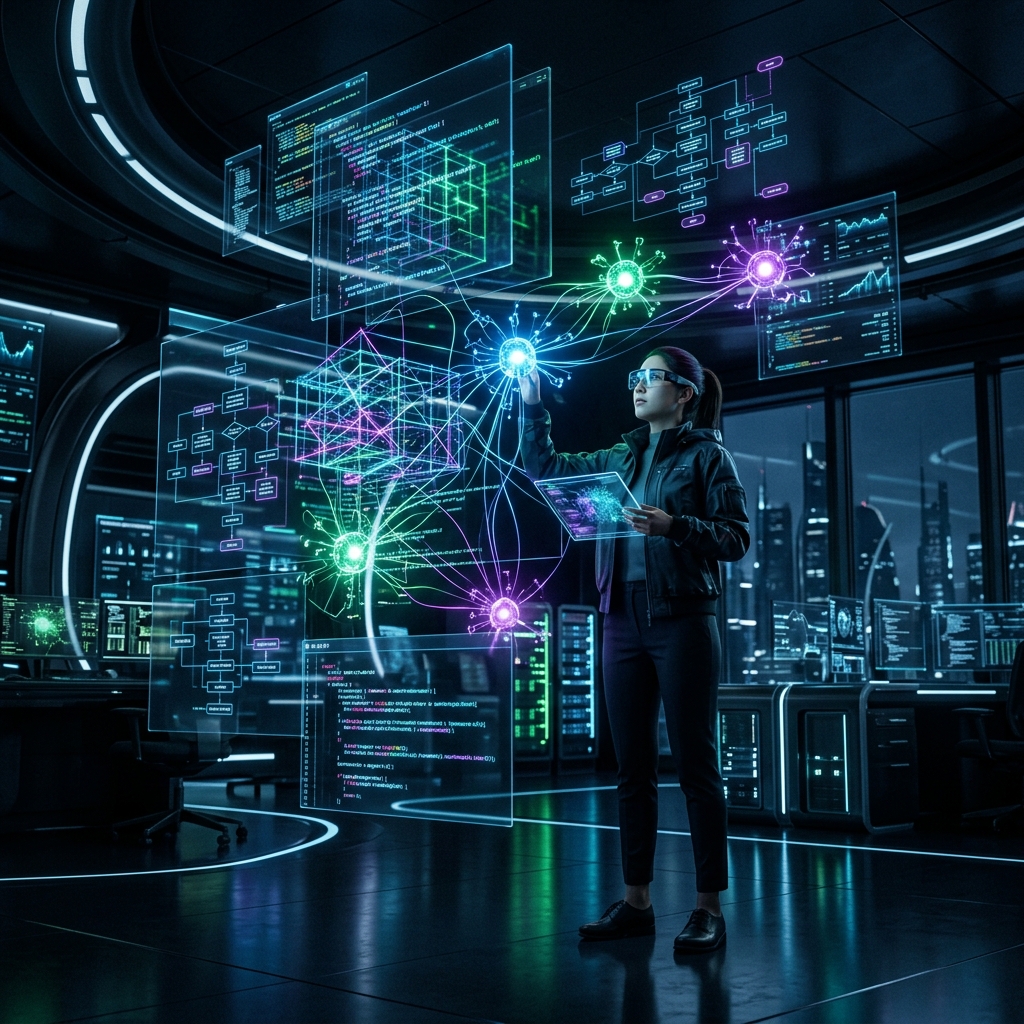
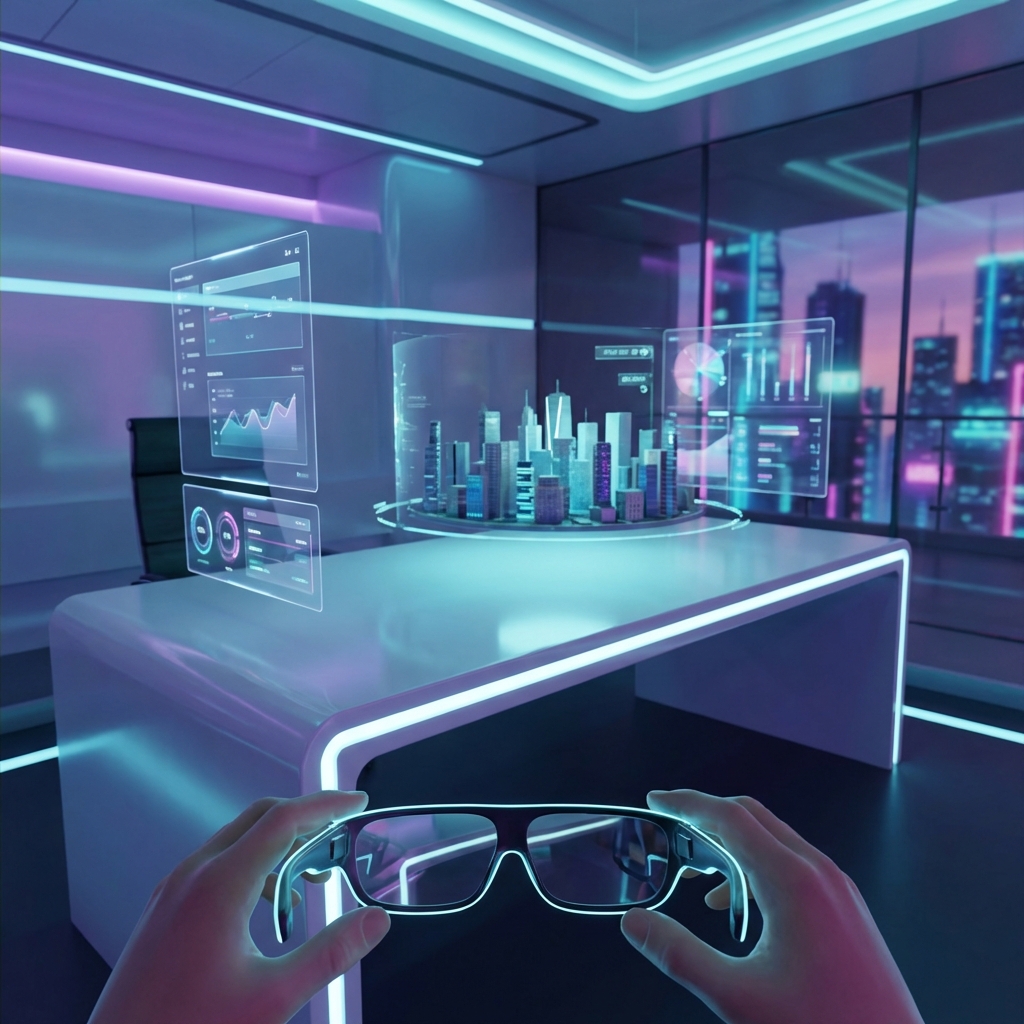
For forty years, we have been trapped in flatland. We stare at glowing rectangles—phones, laptops, TVs. But 2026 marks the beginning of the end for the 2D screen. With the mass adoption of lightweight AR glasses, we are entering the age of Spatial Computing.
This article explores the liberation of the interface, the rise of the Infinite Desktop, and why "looking at" a computer is being replaced by "living inside" one.
1. The Infinite Desktop
The biggest limitation of productivity has always been screen real estate. Monitors are heavy, expensive, and finite. Spatial computing removes the bezel.
The New Workflow: Imagine sitting at a coffee shop. You put on a pair of glasses, and suddenly you have three 50-inch monitors floating in front of you. Your email is to the left, your code is in the center, and your Spotify playlist is hovering over your coffee cup. This is the Infinite Desktop.
2. Collaborative Presence (Holo-Conferencing)
Zoom fatigue is real because staring at a grid of faces is unnatural. Spatial computing brings calibrated presence.
Remote, but Real: In 2026, remote colleagues appear as 3D avatars sitting across the table from you. Spatial audio makes their voice sound like it's coming from their specific location. It tricks the brain into believing you are physically together, building trust and reducing burnout.
3. The Death of the "Device"
We are moving away from "using a device" to "using the world." Need a keyboard? A virtual one appears on the table. Need a TV? Pinch your fingers and stretch a screen onto the wall.
Ambient Apps: Apps are no longer things you open and close. They are persistent widgets in your space. A weather cloud hovers by the window; a calendar is pinned to the fridge. The digital and physical are indistinguishable.
4. Design for Depth: The New UI/UX
Designers in 2026 aren't building for 1920x1080; they are building for XYZ coordinates. UI is no longer flat; it has volume, shadow, and physics.
Gaze & Gesture: The mouse is dead. Your eyes are the cursor, and your fingers are the click. This intuitive interaction model lowers the barrier to entry for technology to near zero.
5. Privacy in a Mapped World
To place digital objects in the real world, the computer must map the real world. This raises massive privacy concerns. 2026 sees the rise of "Local Mapping" protocols, ensuring your living room's layout data never leaves your local hardware.
6. Industry Revolution: Beyond the Office
Spatial computing is not just for emails; it is reshaping the physical workforce. In 2026, the adoption of AR in high-skill industries has skyrocketed.
Healthcare: Surgeons now operate with "X-Ray Vision," overlaying MRI scans directly onto the patient's body in real-time, reducing error rates by 40%.
Education: History class is no longer about reading a textbook; it's about standing in the middle of the Battle of Thermopylae. Students learn by experiencing, leading to retention rates three times higher than traditional methods.
7. The "Passthrough" Lifestyle
We are entering the era of "Passthrough" living. High-fidelity cameras on the outside of headsets stream the real world to your eyes with near-zero latency, but with a digital layer of enhancement.
Real-World Ad-Block: Users are already using AI filters to "delete" billboards from their view as they walk down the street, replacing ads with calming art or useful navigational arrows.
Universal Translation: Travel has changed forever. When you look at a menu in Tokyo or a street sign in Paris, the text instantly translates into your native language in the same font and style. The language barrier has effectively dissolved.
Conclusion
We are not just upgrading our screens; we are removing the barrier between us and information. Spatial computing is the most significant shift since the smartphone. Look up; the future is floating right in front of you.