In the digital age, privacy is a myth. Every email, every transaction, and every password sent over the classic internet is vulnerable. But a revolution is quietly happening in labs across the globe. By 2027, the first nodes of the Quantum Internet will go live, promising a future where hacking is not just difficult—it is physically impossible.
This article explores the physics of secure communication, the end of cyberwarfare, and how Quantum Entanglement is the ultimate encryption.
1. The Vulnerability of "Classic" Data
Today's encryption relies on math. It works because it takes a supercomputer millions of years to factor large prime numbers. But with the rise of Quantum Computers, those codes can be broken in seconds. This is known as "Q-Day"—the day all current encryption becomes obsolete.
The Solution: You don't fight quantum with math; you fight it with physics. The Quantum Internet doesn't rely on hard problems; it relies on the fundamental laws of the universe.
2. Quantum Key Distribution (QKD)
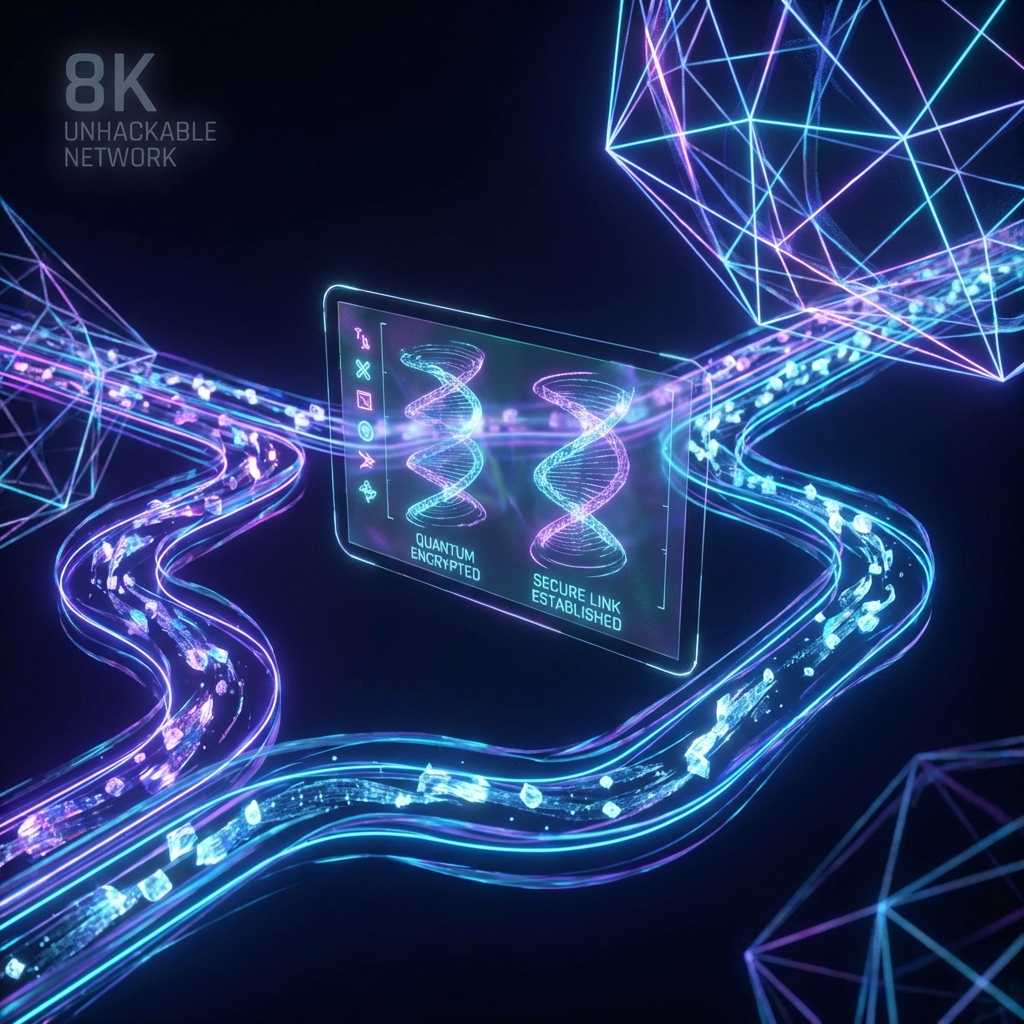
The core technology is QKD. It sends encryption keys using individual photons. According to the No-Cloning Theorem of quantum mechanics, you cannot copy an unknown quantum state.
The "Tripwire" Effect: If a hacker tries to intercept the photon to read the key, the act of measurement changes the photon's state. The receiver instantly knows the line is tapped and discards the key. It is the ultimate burglar alarm.
3. Entanglement: Spooky Action at a Distance
Einstein called it "spooky," but in 2027, it's infrastructure. Quantum Entanglement links two particles so that the state of one instantly affects the other, no matter the distance.
Teleportation of Information: This allows for "Quantum Teleportation"—transferring the state of a qubit across a network without it ever traversing the space in between. You can't hack what isn't there.
4. The Hardware Revolution: Repeaters and Memories
Sending photons over long distances is hard; they get absorbed by fiber optic cables. The breakthrough of 2026 was the Quantum Repeater—a device that can catch, store, and re-transmit entanglement without breaking it.
Diamond Memories: We are now using synthetic diamonds to store quantum states at room temperature, making the hardware durable enough for real-world deployment.
5. The Geopolitical Race
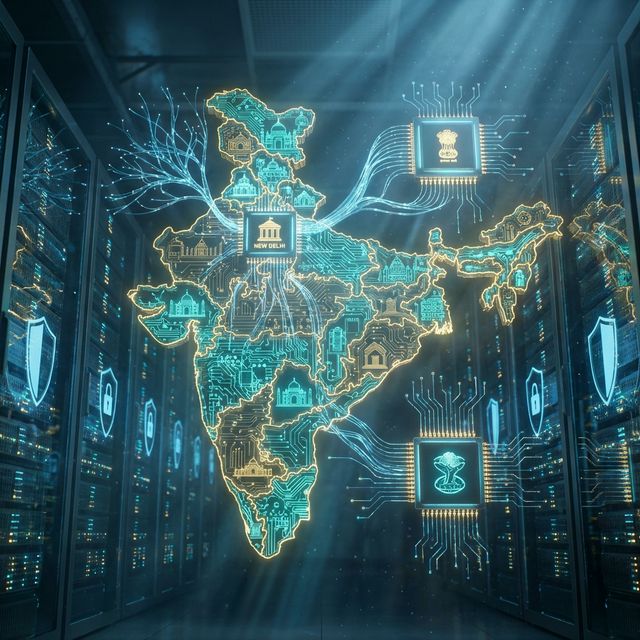
Whoever controls the Quantum Internet controls the world's secrets. Nations are racing to build "Q-Networks."
The Satellite Layer: Since 2025, low-orbit satellites have been beaming entangled photons between continents, creating a global mesh of unhackable links.
6. What This Means for You
For the average user, the Quantum Internet won't look different. You'll still use a browser. But the "green lock" icon will mean something entirely new.
Financial Security: Bank transfers will be mathematically proven secure.
Voting: Electronic voting can finally be trusted, as votes can be verified without being revealed.
Conclusion
The Quantum Internet is not just an upgrade; it is a new paradigm. We are moving from the era of "Computed trust" to "Physical trust." In 2027, the only way to hack a message will be to break the laws of physics.