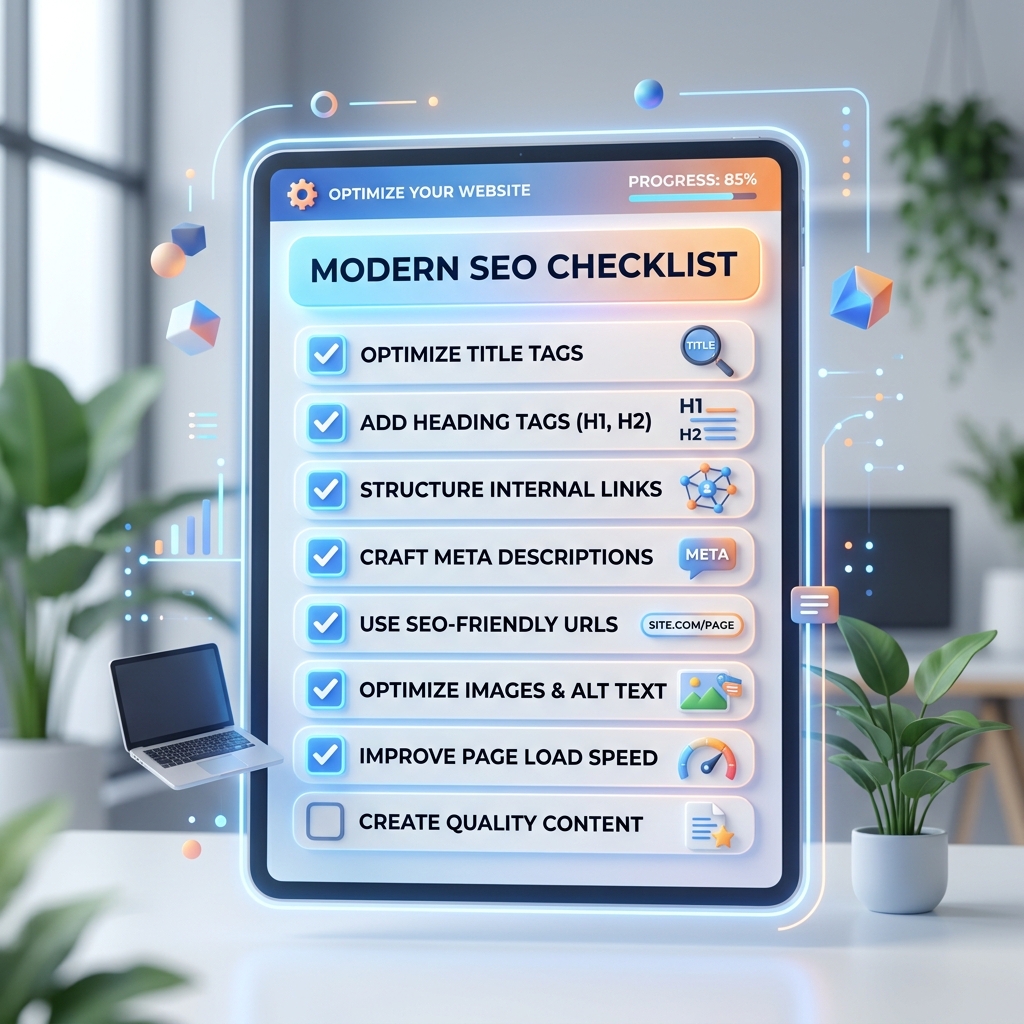

Small business websites often invest in more content before the technical foundation is ready. That creates friction fast. Search engines may find the pages, but they do not always interpret them correctly or prioritize them the way you expect.
If you are about to publish more service pages or blog posts, check the technical basics first. Our free SEO checker is useful for page-level validation, but this guide explains the bigger checklist behind those signals.
1. Canonicals must be explicit and correct
Every important page should declare the preferred URL version. Bad canonicals split signals and create duplication problems, especially when pages are reachable through parameters, tracking tags, or inconsistent trailing slash rules.
2. Robots rules should protect only what needs protection
Robots mistakes are common. Teams accidentally block sections, forget inherited noindex rules, or leave staging behavior in production. Revenue pages should stay clearly indexable unless there is a deliberate reason not to index them.
3. Sitemaps and internal links need to agree
Your XML sitemap should point to the important URLs you want discovered, and your internal linking should reinforce those same pages. A sitemap is not a substitute for strong internal architecture, but it should not conflict with it either.
4. Structured data should match the page type
Use schema where it helps clarify the page. FAQs, services, organizations, and articles all have different use cases. The goal is not to stuff markup everywhere. The goal is to make page meaning easier to understand.
5. Asset quality matters
Broken favicons, missing og:image assets, and weak image alt text are not the biggest ranking signals, but they often correlate with pages that were never fully finished. Technical polish matters because it reflects overall quality control.
6. Re-check before scaling
Before you publish the next wave of pages, run quality control on the important templates and URLs. It is easier to scale a clean system than to repair dozens of inconsistent pages later.
Conclusion
Technical SEO basics are not glamorous, but they are often the reason a page underperforms. Clean up the crawlable foundation, validate important URLs with a checker, and then scale content with fewer surprises.