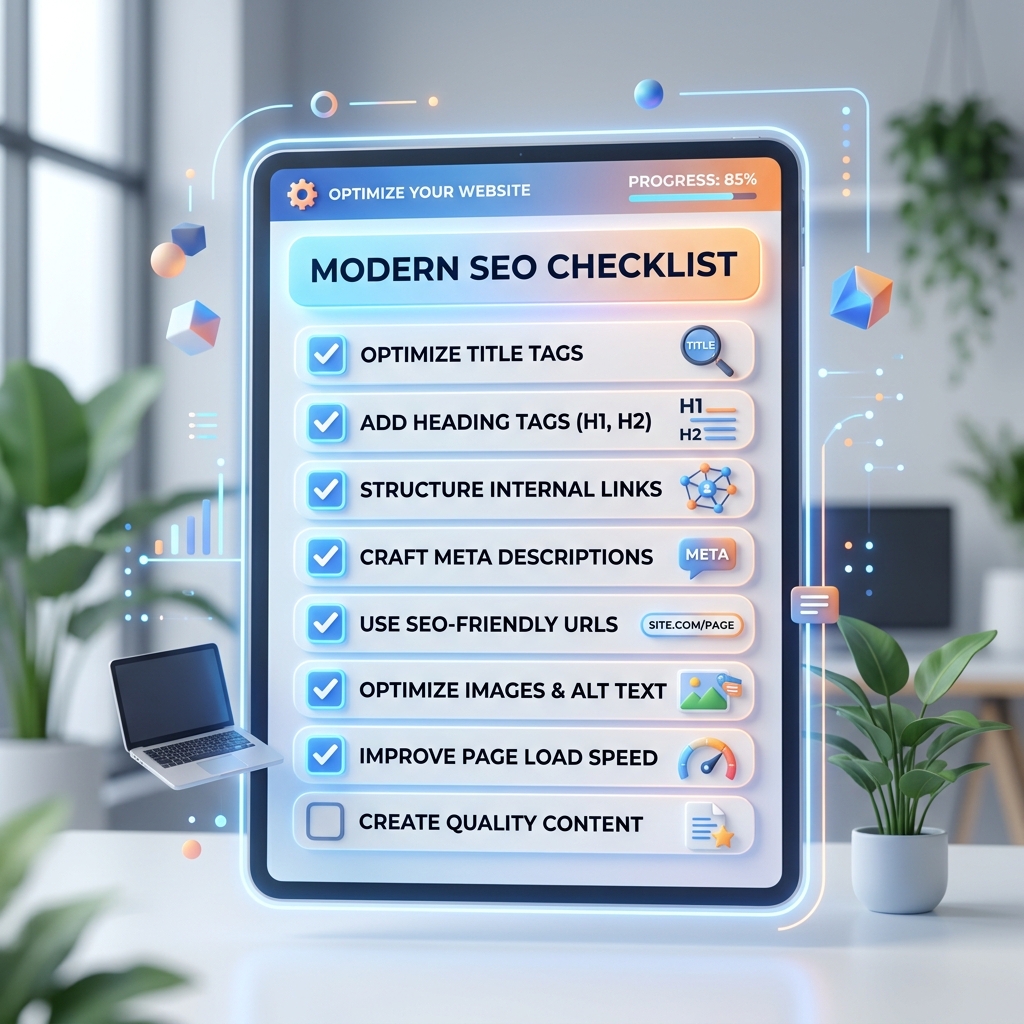

A free SEO checker is one of the fastest ways to spot obvious issues on a live page. It tells you whether the page has a usable title tag, a strong meta description, clear heading structure, crawl-facing metadata, and basic structured data. That matters because many pages fail long before advanced SEO strategy becomes the bottleneck.
At the same time, a free tool is not the same as a full audit. If you are trying to rank a high-value service page, you need to know where the quick checker helps, where it stops, and what to fix first.
1. What a free SEO checker does well
A free checker is best for page-level quality control. It can surface title tag gaps, weak meta descriptions, missing or duplicate H1s, canonical issues, robots problems, broken internal links, missing schema, social tag gaps, and thin copy.
Those are not small issues. They directly affect how clearly search engines understand the page and whether the result looks competitive in search.
2. What a full SEO audit adds
A full audit zooms out from one page into the entire website. It looks at template duplication, crawl traps, internal-link architecture, content cannibalization, sitemap quality, redirect patterns, Core Web Vitals trends, and how well the content actually matches search intent across the site.
If the website SEO checker says the page is technically decent but rankings still stall, this is usually where the deeper work starts.
3. What to fix first after a checker report
Start with the changes that remove ambiguity. Tighten the title tag. Improve the meta description. Make sure the page has one clear H1. Confirm the canonical is correct. Remove accidental noindex directives. Add schema that matches the page type.
After that, improve depth, internal links, and the supporting proof on the page. Search engines do not rank metadata alone. They rank pages that look complete, useful, and trustworthy.
4. Where businesses waste time
Many teams jump into backlinks or advanced tools before the page itself is ready. That is backward. If the page still has weak titles, thin copy, or no structured data, authority is not the first bottleneck. Clarity is.
5. The practical workflow
Use a free checker first. Fix the obvious page issues. Re-run the report. Then decide whether the page still needs deeper content strategy, technical cleanup, or a broader engagement like SEO services.
Conclusion
A free SEO checker is not a replacement for a full audit, but it is the right starting point for most pages. The fastest ranking gains usually come from fixing what the page is clearly missing before expanding into broader SEO work.